-
Second place among Baghdad university‘s affiliates in implementing human rights activities
-
A Master Thesis at Al-Khwarizmi College Of Engineering Seek The Production Of Biofuel From Algal Oil
-
Awareness workshop about UN resolutions 1325
-
New Patent Right about Microbial Desalination Cell
-
A master defense on Biphasic system: A Green Approach to selective Enzyme Recovery and Purification
-
Biphasic System: A Green Approach to Selective Enzyme Recovery and Purification
-
A master defense on Wastewater Treatment using Bacterial enzymes
-
A lecturer from Al-Khwarizmi College internationally participated in the Cybersecurity and AI conference
-
Al-Khwarizmi College of Engineering Forges Consulting Contract with Iraqi Ministry of Health
-
Al-Khwarizmi College of Engineering Hosts Symposium on Recent Advances in Chemical Engineering
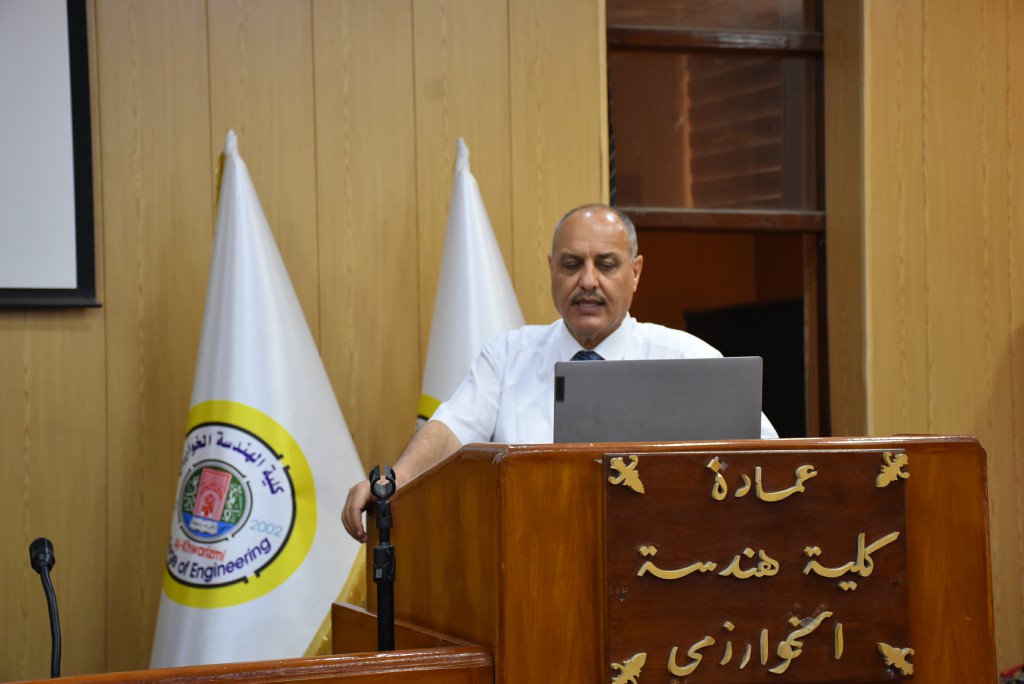
On Wednesday, September16,2026 a lecturer from Alkhwarizmi college of engineering Dr. Noor Rashid participated in a meeting organized by Human rights Division at the presidency of Baghdad University, the meeting was attended by officers from the university`s affiliates following official invitations sent to them.
The meeting included showcasing prominent activities that were implemented , obstacles faced by units, as well as exchanging opinions and suggestions related to developing awareness programs and promoting a human rights culture within the university ‘s environment.
The meeting involved the announcement of Alkhwarizmi college obtaining the second place in terms of number of implemented activities in the field of human rights, which reflects the consistent efforts of Human rights units in implementing and diversifying their programs and activities.
This achievement is the result of the efforts made by Dr.Noor Rashid in strengthening understandinh of human rights and promoting awareness within the university community , in collaboration with the deanship , scientific departments, and related authorities.

On Wednesday, September, 17 ,2026 Al-Khwarizmi College of engineering held a master thesis defense in the field of Biochemical engineering titled “Utilization of Prepared Heterogeneous Catalysts for the Production of Economical Biodiesel from Low-Quality Oils”, for the master candidate (Ghufran Amir Abdullah) at the thesis defense hall, where a degree of passing with distinction was awarded for her research findings.
The committee is composed of the following members:
- Professor Dr. Zaidon Mohsen Shukoor, Chair
- Professor Dr. Ghanim Saddam Hasan, Examiner
- Lecturer Dr. Hasan Hadi Hasson, Examiner
- Assistant Professor Dr. Ziad Tarek Ismail, Examiner and Supervisor


The study aimed to produce biofuel (biodiesel) from extracted algal oil using a prepared heterogeneous catalyst based on potassium hydroxide (KOH) supported on ZSM-5, with the objective of developing a low-cost and environmentally friendly technology for clean and sustainable energy production.
The results demonstrated the successful conversion of algal oil into biodiesel with high efficiency. The optimum transesterification conditions were determined to be a methanol-to-oil molar ratio of 7:1, catalyst loading of 5 wt.%, reaction temperatures of 69.7 °C, and reaction time of 94.5 minutes. Under these conditions, the highest biodiesel yield of 94.7% was achieved, along with a notable reduction in reaction time and energy consumption.
This study represents an important scientific step toward supporting sustainable energy alternatives and strengthening national efforts in the field of clean energy. It contributes to the achievement of several Sustainable Development Goals (SDGs), particularly SDG 7, concerning affordable and clean energy; SDG 12, concerning responsible consumption and production; SDG 13, concerning climate action through the reduction of emissions and pollution; and SDG 9, concerning industry, innovation, and infrastructure. This reflects the role of scientific research in supporting sustainable development and serving society.
On Tuesday September,15,2026 A lecturer from Al-Khwarizmi College of engineering participated in an awareness workshop about UN resolutions 1325.
The workshop titled “Mechanisms for implementing UNSCR1325” was delivered by Dr. Noor Rashid Abdullatif, the responsible of human rights unit, organized by the center for the revival of Arab Scientific Heritage.
The workshop addressed the essential pillars of resolutions and mechanisms for implementing them in Iraq, as well as focusing on the woman role in decision making, protection, and rights.
Also, the workshop highlighted the importance of the academic institutions in raising awareness of women`s rights and promoting peace.
At the end of the workshop, an appreciation certificate was presented to the lecturer in recognition of her efforts and participation.
The assistant professor Dr. Ziad Tariq Muhammad and in collaboration with a group of Iraqi scholars obtained a patent right from Central Organization for Standardization and Quality Control / Ministry of Planning, under the title “Design and Fabrication of a Microbial Desalination Cell with a Novel Algal Cathode and Enhanced lon Transfer through Improved Mixing,”
This patent reflects a unique researching effort exerted by faculty members in advancing scientific research and innovation, as well as strengthening academic collaboration between Iraqi universities.

On Thursday, August, 27 ,2026 Al-Khwarizmi College of engineering held a master thesis defense in the field of Biochemical engineering titled “Biphasic system: A Green Approach to selective Enzyme Recovery and Purification”, for the master candidate (Noor Saad Fadhil) at the thesis defense hall, where a degree of passing with merit was awarded for her research findings.
The committee is composed of the following members:
- Professor Dr. Muhammad Abd atiyah Al-Saraj, Chair
- Assistant Professor Dr. Nagham ubayed Karim, Examiner
- Assistant Professor Dr. Atheer Muhammad Ghalib, Examiner
- Assistant Professor Dr. Khalid Walid Hameed, Supervisor

This study deals with the extraction and recovery of invertase enzyme from tomato using an aqueous two-phase system as a mild and effective method for enzyme separation. Several systems composed of polyethylene glycol with citrate and phosphate salts were compared to select the most efficient system. The effects of temperature, pH, polymer concentration, salt concentration, and polymer molecular weight on recovery efficiency were studied.
The results showed that lower temperature helped maintain enzyme stability and improved its separation between the two phases. pH also had a clear effect on the enzyme charge and its interactions with the system components, which affected its partitioning and recovery efficiency.
The best system was polyethylene glycol 4000 with sodium citrate, which achieved a recovery of 89.8% and a partition coefficient of 8.8. The extraction conditions were statistically optimized to obtain the best combination of factors affecting enzyme recovery.
After selecting the best system, the effects of sodium chloride and magnesium chloride were studied to increase recovery efficiency. The addition of sodium chloride increased the recovery to 95.8%, while magnesium chloride achieved the highest recovery of 96.7%.
The results of this study confirm that the aqueous two-phase system is a promising and effective method for recovering invertase from tomato with high efficiency.


This study deals with the extraction and recovery of invertase enzyme from tomato using an aqueous two-phase system as a mild and effective method for enzyme separation. Several systems composed of polyethylene glycol with citrate and phosphate salts were compared to select the most efficient system. The effects of temperature, pH, polymer concentration, salt concentration, and polymer molecular weight on recovery efficiency were studied. The results showed that lower temperature helped maintain enzyme stability and improved its separation between the two phases.

pH also had a clear effect on the enzyme charge and its interactions with the system components, which affected its partitioning and recovery efficiency. The best system was polyethylene glycol 4000 with sodium citrate, which achieved a recovery of 89.8% and a partition coefficient of 8.8. The extraction conditions were statistically optimized to obtain the best combination of factors affecting enzyme recovery. After selecting the best system, the effects of sodium chloride and magnesium chloride were studied to increase recovery efficiency. The addition of sodium chloride increased the recovery to 95.8%, while magnesium chloride achieved the highest recovery of 96.7%. The results of this study confirm that the aqueous two-phase system is a promising and effective method for recovering invertase from tomato with high efficiency.


On Wednesday, August, 26 ,2026 Al-Khwarizmi College of engineering held a master thesis defense in the field of Biochemical engineering titled “Wastewater Treatment using Bacterial enzymes”, for the master candidate (Amal Shakir Laftah) at the thesis defense hall, where a degree of passing with distinction was awarded for her research findings.
The committee is composed of the following members:
- Professor Dr. Sami Dawood Salman, Chair
- Professor Dr. Wathiq Abbas Hateet, Examiner
- Lecturer Dr. Sahar Ghazi Omran, Examiner
- Professor Dr. Alaa Karim Muhammad, 1st Supervisor
- Lecturer Dr. Hasan Nadhim Nimer, 2nd Supervisor

This thesis investigates the enzymatic treatment of dairy wastewater, which is characterized by a high organic load and contains proteins, lipids, and other biodegradable compounds that may pose environmental risks when discharged without adequate treatment.
The study aimed to evaluate the efficiency of hydrolytic enzymes, particularly protease and lipase, in improving the quality of dairy wastewater and reducing its organic content. Bacterial isolates capable of producing protease and lipase were isolated and identified, followed by enzyme production and purification using ammonium sulfate precipitation and dialysis.
The purified enzymes were subsequently applied individually and in combination to dairy wastewater to evaluate their effects on selected physicochemical characteristics and organic pollutants. Changes in the organic components of the wastewater were further investigated using size-exclusion high-performance liquid chromatography.
The results demonstrated that enzymatic treatment improved the quality of dairy wastewater and contributed to a reduction in its organic content. The combined application of protease and lipase showed greater treatment efficiency than the application of either enzyme individually.
Chromatographic analysis also revealed clear changes in the protein and organic components following enzymatic treatment, indicating the degradation of complex compounds into simpler and more biodegradable forms.
Overall, the findings demonstrate the potential of enzymatic treatment as an efficient and environmentally friendly approach for dairy wastewater management, with promising prospects for further development and industrial-scale application.


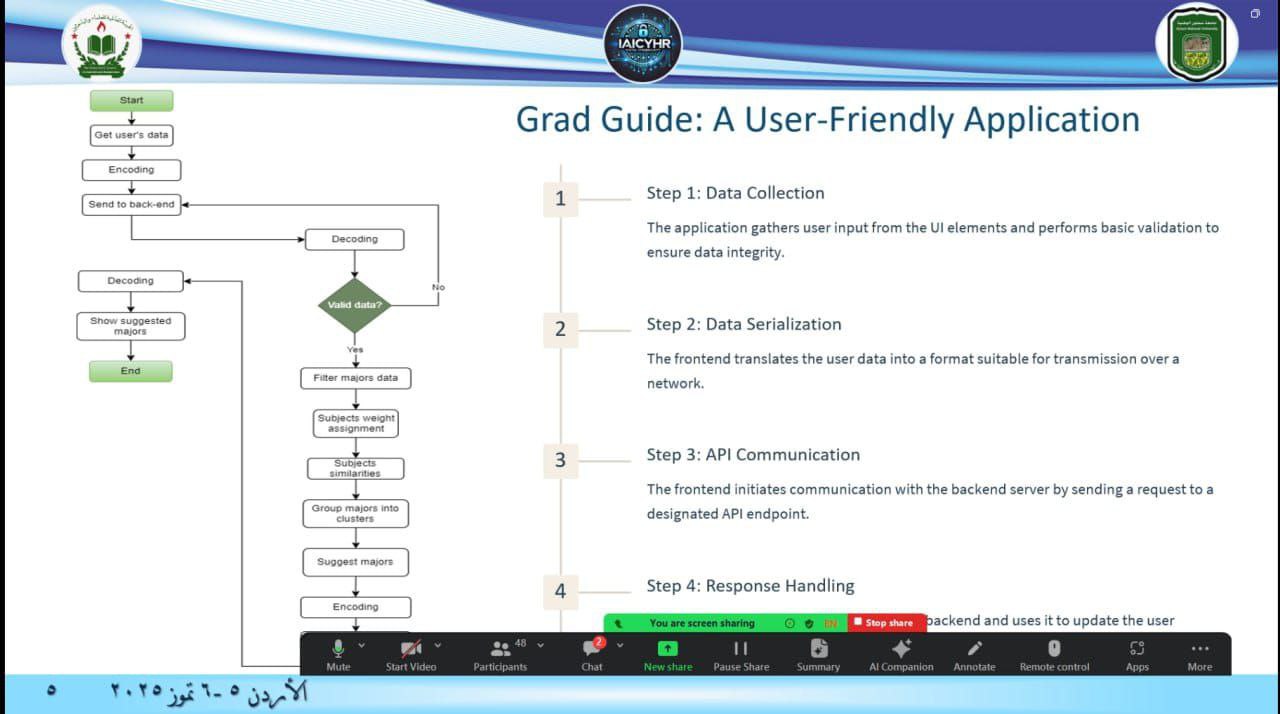
Under the ongoing efforts of Al-Khwarizmi College of Engineering at Baghdad University to support scientific research and foster international academic collaboration, Assistant Professor Dr. Heba Muhammad Fadhil, a lecturer from the Communication and Information Engineering Department, participated in the 12th International Scientific Conference titled “The Impact of AI and Cybersecurity on Human Life,” held from July 5 to 6, 2025. The proceedings were organized by the International Council of Scientists and Researchers, Kingdom of Morocco, in collaboration with Ajloun National University.
During the conference, Dr. Heba presented a research paper titled (Grad Guide: Intelligent Application to Assist 12th Grade Students in Filling out Iraqi universities Application Forms)
The research demonstrated the development of an interactive AI application technology to aid students in the process of filling out electronic admission forms of Iraqi Universities by enhancing the accuracy of data entry and reducing common mistakes, which in turn contributes to aiding students in their decisive academic stage.
This scientific participation embodied the commitment of the college in encouraging faculty members to engage in international proceedings and employing cutting-edge technologies to serve society and the education field in alignment with the college’s vision of fostering intelligent education and academic innovation.

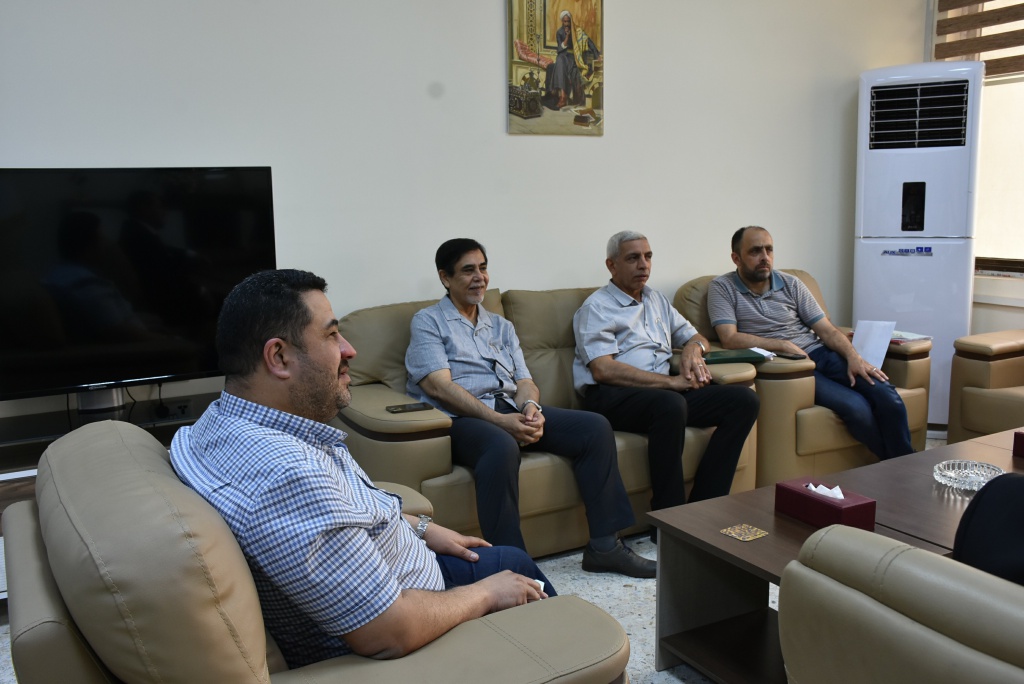
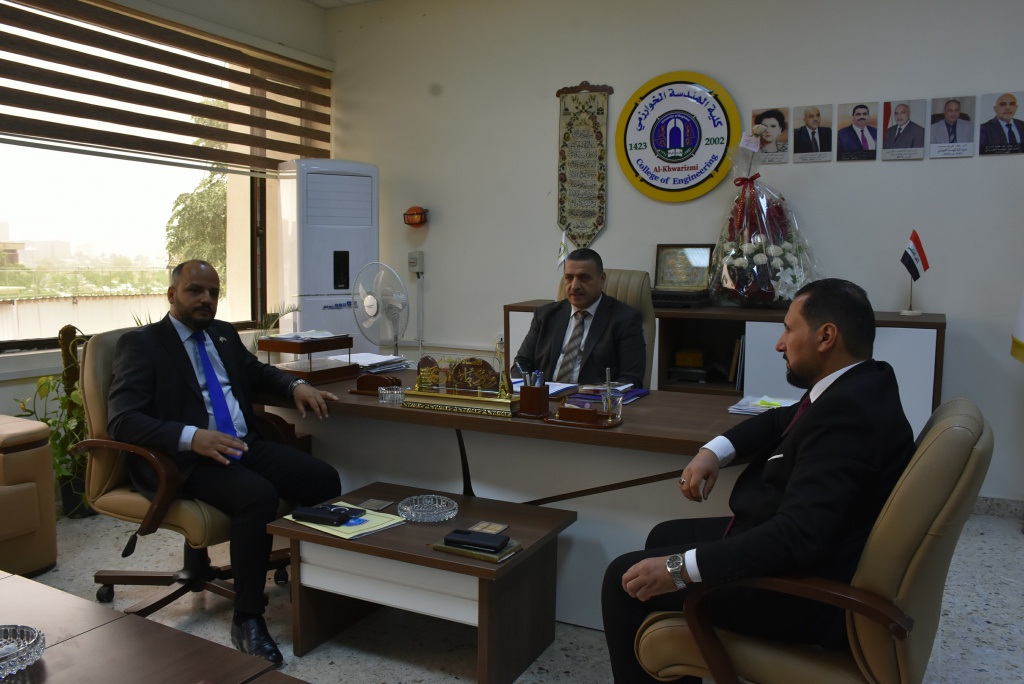
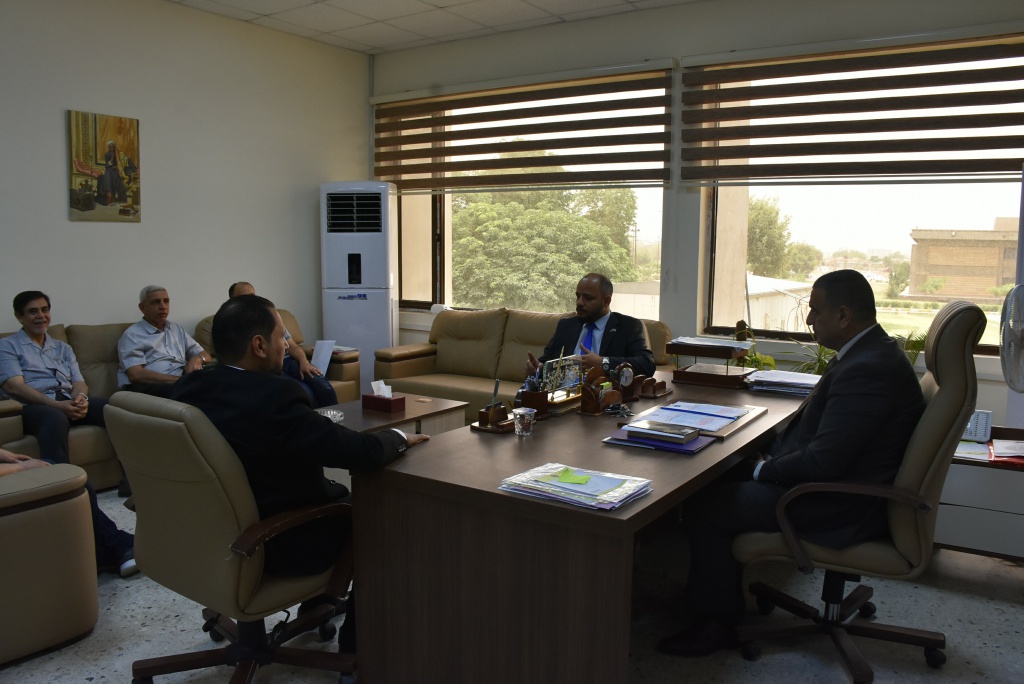
Al-Khwarizmi College of Engineering took a significant step forward in collaboration with the Iraqi Ministry of Health/Health Insurance Authority by organizing a consultative contract meeting. The meeting, chaired by Mr. Farid Kazem Sidra, Director of the Legal, Administrative, and Financial Directorate, represented the Ministry of Health, while Assistant Professor Dr. Nibras Hussein, Director of the Consulting Office at Al-Khwarizmi College of Engineering, led the college's delegation.
The contract aims to prepare a comprehensive guide to requests for proposals (RFP), outlining system requirements, estimating costs, and establishing criteria for comparing companies. Additionally, Al-Khwarizmi College of Engineering will provide support throughout the process of selecting the appropriate company. The meeting, endorsed by the Dean of the College of Engineering, Professor Dr. Wadud Taher Muhammad, and attended by Administrative Assistant Professor Dr. Fayez Fawzi Mustafa and Professor Muhannad Kazem Saber, aimed to bolster the college's standing in scientific and academic spheres.
Both parties expressed their commitment to cooperation and emphasized the importance of concerted efforts to advance work in the public interest. This collaborative endeavor marks a significant milestone in leveraging academic expertise to address real-world challenges and enhance healthcare services in Iraq.
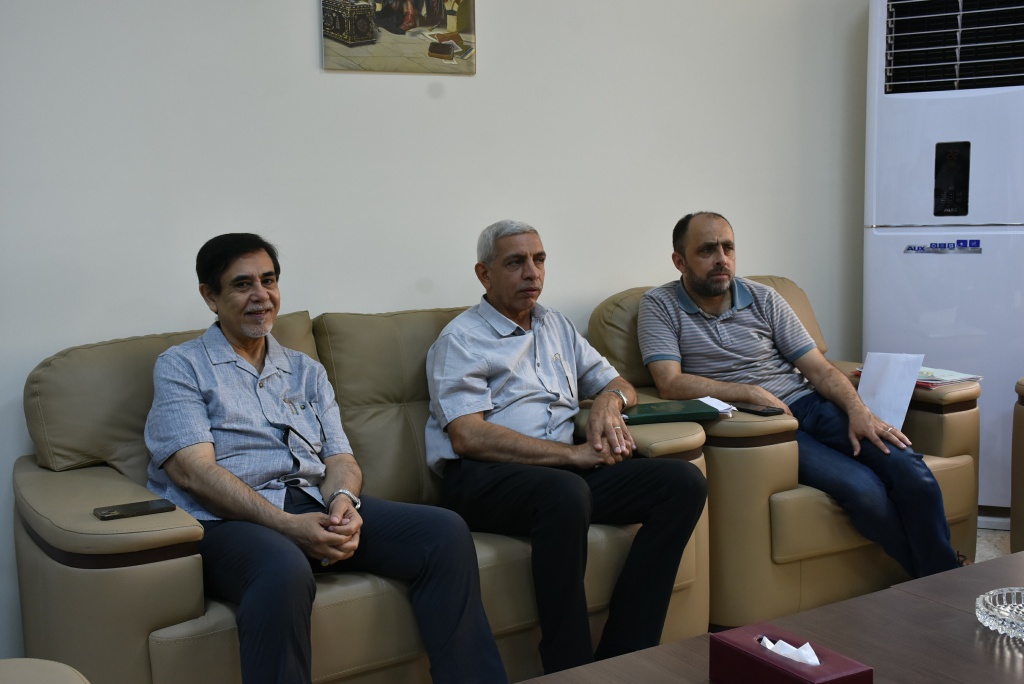
The Department of Biochemical Engineering at Al-Khwarizmi College of Engineering organized a scientific symposium on modern developments and trends in chemical engineering. Held on Thursday, April 6, 2023, at Al-Khwarizmi Central Hall, the symposium featured esteemed speakers including Prof. Dr. Alaa Karim Muhammad, Dr. Ali Hussein Abbar, and Prof. Dr. Saleh Abdul-Jabbar Saleh from Al-Qadisiyah University's College of Engineering.
During the symposium, Prof. Dr. Alaa Karim emphasized the crucial role of biochemical engineering in addressing industrial challenges and the importance of research and development in finding effective solutions for the Iraqi industry. Dr. Ali Hussein Abbar discussed advancements in bioelectrochemical systems and their application in treating pollution generated by the oil industry, highlighting efficient and economically feasible approaches.
Prof. Dr. Saleh Abdul-Jabbar Saleh shed light on the pharmaceutical industry's contribution to societal welfare and the role of biochemical engineers in its development through research and innovation. Key recommendations from the symposium included supporting the national industry, fostering collaboration between the industrial sector and Iraqi universities, and promoting interdisciplinary cooperation among engineers to enhance the country's overall development.
The symposium served as a platform for knowledge exchange and collaboration, emphasizing the importance of research-driven solutions in advancing the field of chemical engineering and contributing to the progress of the Iraqi industry.